What 2,200 Employees Taught One Bank About Brand Consistency

55
 min read
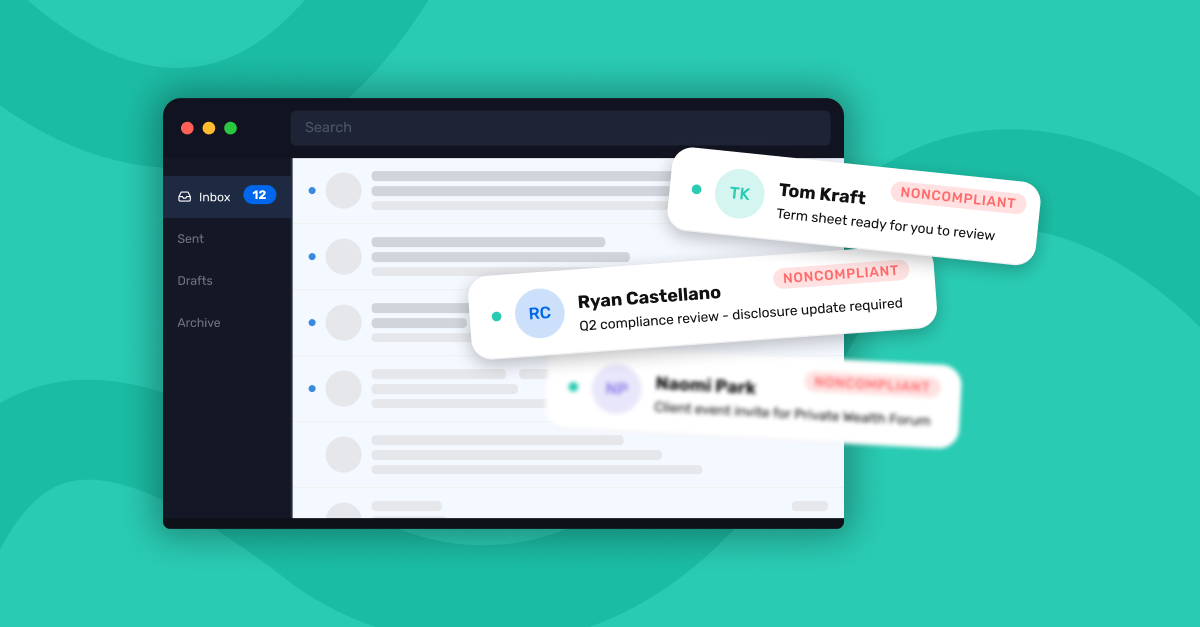
An email inbox interface displaying outbound employee emails flagged with noncompliant labels — illustrating how ungoverned employee email creates compliance exposure at financial institutions.
TABLE OF CONTENTS
Example H2

This is a div block with a Webflow interaction that will be triggered when the heading is in the view.

Example H3
Example H4
Example H5
Example H6
Key Takeaways
  • A financial institution with 2,200 employees was generating tens of millions of annual brand impressions through employee email with no governance, no consistency, and no audit trail.
  • The trigger wasn't a regulator — it was a CEO who found expired J.D. Power awards still running in employee signatures months after the license lapsed.
  • Centralized email signature management gave marketing ownership of the brand experience, IT a 15-minute deployment, and compliance enforced disclaimers and opt-outs across every division automatically.
    • How a regional financial institution discovered that their biggest brand risk was hiding in plain sight — in every email their employees sent.

      There's a question that stops most banking executives cold:

      Who controls what your employee emails look like?

      Not your marketing campaigns. Not your website. Not your social posts. The one-to-one emails your 500, 1,000, or 2,000+ employees send every single day.

      At most institutions, the answer is nobody.

      Your Highest-Frequency Brand Interaction Is the One Nobody Manages

      Think about how much time and budget goes into your website. Your ad creative. Your branch signage. Every pixel gets reviewed, approved, and polished before it reaches a customer.

      Now think about how many emails your employees sent yesterday.

      If your institution has 500 employees, that's roughly 20,000 customer interactions. At 2,000 employees, it's closer to 80,000. Over a year, that's tens of millions of brand impressions — and nobody is governing what any of them look like.

      Wrong logos. Expired certifications. Missing disclosures. Five different font treatments across the same institution. Promotional emails going out from mobile with no unsubscribe link.

      Your customers see all of it. Every day.

      The Brand Blind Spot Most Financial Institutions Share

      Most marketing teams know this problem exists. It's not a secret. But it never cracks the top 10 priorities. There's always a campaign to launch, a branch to rebrand, a website to update. Employee email sits in the gap between marketing, IT, and compliance — and because nobody owns it, nobody fixes it.

      Meanwhile, regulators are paying attention. The CFPB fined Navy Federal Credit Union $95 million in November 2024. The SEC has collected more than $2 billion since 2021 for communication failures across 100+ firms. CAN-SPAM requires opt-out links on every promotional email, including mobile. Most institutions can't guarantee this right now.

      But the compliance risk isn't even the main point. The main point is brand perception.

      Every one of those emails is a brand impression. And right now, your brand is showing up in ways you can't see, in formats you didn't approve, with information that might be wrong.

      One Institution Decided to Fix It

      A 2,200-employee regional financial institution with five divisions — retail, commercial, mortgage, wealth management, and treasury — had been sitting with this problem for years.

      Their marketing team had been pushing for centralized control over employee email. And for years, it didn't feel urgent enough.

      Then the CEO discovered expired J.D. Power awards still in employee signatures — months after the license had run out. Leadership had no idea.

      It wasn't a campaign issue. It was a credibility issue.

      Regulatory pressure eventually forced the conversation — CAN-SPAM requirements, standardized disclosures — and the institution realized they had millions of daily customer interactions with no systematic way to control what any of them looked like.

      They Didn't Train Employees. They Changed the System.

      The institution didn't send new brand guidelines. They didn't create a task force. They didn't try to get 2,200 employees to format their own email signatures correctly.

      They changed the infrastructure.

      Marketing took ownership of the brand experience — signature design, banner campaigns, content updates across all five divisions.

      IT handled deployment — an Outlook add-in that deployed in about 15 minutes through M365, with automated directory sync and minimal ongoing lift.

      Compliance defined the rules — which fields get locked, where disclaimers go, where opt-outs appear.

      They started with their highest-risk division. Proved it worked. Then expanded across the entire organization.

      What Their Brand Looks Like Now

      Today, every email their customers receive — across all five divisions, on every device — is consistent, professional, and compliant. No employee action required.

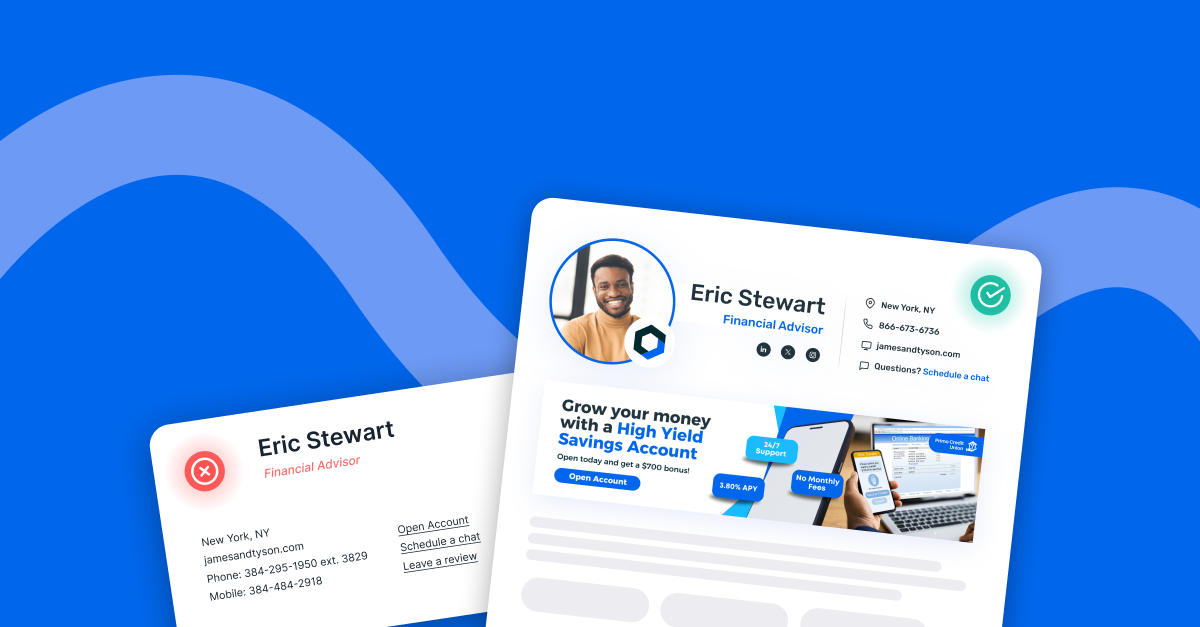
      Their email signatures include locked branding, compliant disclosures, and required opt-outs. Their signature banners run targeted campaigns by division — product promotions, event invitations, seasonal offers — all trackable. Their wealth advisors and mortgage lenders use digital business cards that are QR-enabled and compliance-ready.

      What started as a compliance fix became how this institution shows up in every customer interaction.

      What Consistency Actually Built

      The institution came in to fix compliance. What they built was something bigger.

      Every email now reinforces their brand. Consistent across retail, commercial, wealth, mortgage, and treasury. Professional on every device. Compliant without anyone having to think about it. And for the first time, measurable — they can see how their brand shows up across tens of millions of interactions per year.

      No new budget. No new employee behavior. They turned something that was undermining their brand into something that strengthens it every day.

      As the institution's story shows: their pursuit of compliance didn't slow the brand down. It's what made the brand stronger.

      Three Questions to Take Back to Your Institution

      If you're a marketing leader at a bank or credit union, here are three questions worth asking this week:

      1. Who owns employee email at your institution right now? If the answer is "nobody" — that's your starting point.
      2. What would a regulator see if they audited your outbound email today? If you can't answer this with confidence — that's your risk.
      3. Which division has the most compliance exposure? That's where you pilot. Start there. Prove it works. Then expand.

      This isn't a marketing initiative. It's a brand infrastructure decision.

      SUMMARIZE WITH
      How many emails do bank employees send per day?

      A financial institution with 500 employees sends roughly 20,000 customer-facing emails per day. At 2,000 employees, that number climbs to approximately 80,000. Over a year, that volume represents tens of millions of brand impressions — most of which operate outside any governance framework.

      What are the compliance requirements for employee email in financial services?

      Employee-initiated emails at financial institutions are subject to CAN-SPAM opt-out requirements on every promotional message, FINRA recordkeeping obligations, and SEC communication standards. The SEC has collected more than $2 billion since 2021 for communication failures across more than 100 firms. Most institutions cannot currently guarantee CAN-SPAM compliance across mobile-sent employee email.

      What is centralized email signature management for banks?

      Opensense is a centralized email signature management platform that gives financial institutions control over every employee email from a single administrative console. Marketing owns the brand experience. IT handles deployment via an Outlook add-in through M365. Compliance defines which fields are locked, where disclaimers appear, and where opt-outs are enforced — across every division, every device, without requiring employee action.

      How long does it take to deploy Opensense for email signature management?

      Opensense deploys via an Outlook add-in through Microsoft 365 in approximately 15 minutes, with automated directory sync and no mail routing changes required. Most institutions start with their highest-risk division, validate the deployment, and expand from there.

      Can email signatures support marketing campaigns at financial institutions?

      Yes. Opensense establishes the compliance foundation first — locked disclaimers, enforced opt-outs, consistent brand identity across every employee email. Once that infrastructure is in place, the same channel supports targeted campaign banners by division, event promotions, and seasonal offers, all trackable. Governance comes first; activation follows.

      What happens when employee email signatures are not centrally managed?

      Without centralized management, signatures drift across employees and devices. Logos go out of date. Certifications expire without anyone noticing. Disclaimers get dropped. Opt-out links break on mobile. The result is inconsistent brand presentation across millions of customer interactions per year and a compliance posture that cannot be documented or defended in an audit.

      Was this helpful? Share it!
      Opensense logo
      Jass Binning
      VP of Marketing at Opensense

      Jass Binning serves as the Director of Marketing at Opensense, where she oversees the strategic growth and brand positioning of the platform. Jass specializes in high-growth SaaS marketing, focusing on demand generation and brand consistency across complex digital landscapes. Her insights help marketers turn routine business processes into scalable revenue-generating opportunities.

      An email inbox interface displaying outbound employee emails flagged with noncompliant labels — illustrating how ungoverned employee email creates compliance exposure at financial institutions.
      No items found.

      What 2,200 Employees Taught One Bank About Brand Consistency

      May 7, 2026

      How a regional financial institution discovered that their biggest brand risk was hiding in plain sight — in every email their employees sent.

      There's a question that stops most banking executives cold:

      Who controls what your employee emails look like?

      Not your marketing campaigns. Not your website. Not your social posts. The one-to-one emails your 500, 1,000, or 2,000+ employees send every single day.

      At most institutions, the answer is nobody.

      Your Highest-Frequency Brand Interaction Is the One Nobody Manages

      Think about how much time and budget goes into your website. Your ad creative. Your branch signage. Every pixel gets reviewed, approved, and polished before it reaches a customer.

      Now think about how many emails your employees sent yesterday.

      If your institution has 500 employees, that's roughly 20,000 customer interactions. At 2,000 employees, it's closer to 80,000. Over a year, that's tens of millions of brand impressions — and nobody is governing what any of them look like.

      Wrong logos. Expired certifications. Missing disclosures. Five different font treatments across the same institution. Promotional emails going out from mobile with no unsubscribe link.

      Your customers see all of it. Every day.

      The Brand Blind Spot Most Financial Institutions Share

      Most marketing teams know this problem exists. It's not a secret. But it never cracks the top 10 priorities. There's always a campaign to launch, a branch to rebrand, a website to update. Employee email sits in the gap between marketing, IT, and compliance — and because nobody owns it, nobody fixes it.

      Meanwhile, regulators are paying attention. The CFPB fined Navy Federal Credit Union $95 million in November 2024. The SEC has collected more than $2 billion since 2021 for communication failures across 100+ firms. CAN-SPAM requires opt-out links on every promotional email, including mobile. Most institutions can't guarantee this right now.

      But the compliance risk isn't even the main point. The main point is brand perception.

      Every one of those emails is a brand impression. And right now, your brand is showing up in ways you can't see, in formats you didn't approve, with information that might be wrong.

      One Institution Decided to Fix It

      A 2,200-employee regional financial institution with five divisions — retail, commercial, mortgage, wealth management, and treasury — had been sitting with this problem for years.

      Their marketing team had been pushing for centralized control over employee email. And for years, it didn't feel urgent enough.

      Then the CEO discovered expired J.D. Power awards still in employee signatures — months after the license had run out. Leadership had no idea.

      It wasn't a campaign issue. It was a credibility issue.

      Regulatory pressure eventually forced the conversation — CAN-SPAM requirements, standardized disclosures — and the institution realized they had millions of daily customer interactions with no systematic way to control what any of them looked like.

      They Didn't Train Employees. They Changed the System.

      The institution didn't send new brand guidelines. They didn't create a task force. They didn't try to get 2,200 employees to format their own email signatures correctly.

      They changed the infrastructure.

      Marketing took ownership of the brand experience — signature design, banner campaigns, content updates across all five divisions.

      IT handled deployment — an Outlook add-in that deployed in about 15 minutes through M365, with automated directory sync and minimal ongoing lift.

      Compliance defined the rules — which fields get locked, where disclaimers go, where opt-outs appear.

      They started with their highest-risk division. Proved it worked. Then expanded across the entire organization.

      What Their Brand Looks Like Now

      Today, every email their customers receive — across all five divisions, on every device — is consistent, professional, and compliant. No employee action required.

      Their email signatures include locked branding, compliant disclosures, and required opt-outs. Their signature banners run targeted campaigns by division — product promotions, event invitations, seasonal offers — all trackable. Their wealth advisors and mortgage lenders use digital business cards that are QR-enabled and compliance-ready.

      What started as a compliance fix became how this institution shows up in every customer interaction.

      What Consistency Actually Built

      The institution came in to fix compliance. What they built was something bigger.

      Every email now reinforces their brand. Consistent across retail, commercial, wealth, mortgage, and treasury. Professional on every device. Compliant without anyone having to think about it. And for the first time, measurable — they can see how their brand shows up across tens of millions of interactions per year.

      No new budget. No new employee behavior. They turned something that was undermining their brand into something that strengthens it every day.

      As the institution's story shows: their pursuit of compliance didn't slow the brand down. It's what made the brand stronger.

      Three Questions to Take Back to Your Institution

      If you're a marketing leader at a bank or credit union, here are three questions worth asking this week:

      1. Who owns employee email at your institution right now? If the answer is "nobody" — that's your starting point.
      2. What would a regulator see if they audited your outbound email today? If you can't answer this with confidence — that's your risk.
      3. Which division has the most compliance exposure? That's where you pilot. Start there. Prove it works. Then expand.

      This isn't a marketing initiative. It's a brand infrastructure decision.

      LinkedIn iconX iconFacebook icon
      Was this helpful? Share the love.
      Opensense logo
      Jass Binning
      VP of Marketing at Opensense
      View all posts
      CONNECT WITH US
      LinkedIn iconX icon